
Disclosure: As an Amazon Associate I earn from qualifying purchases. How this site works
Choosing Custom T-Shirt Printing for Small Orders
For one shirt or a small batch, the best printer is one with no minimums, a clear design tool and honest turnaround times. Here is what to compare.
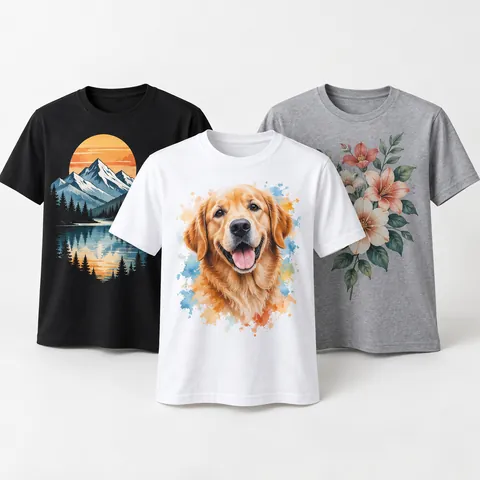 Custom t-shirt printing services (DTG/DTF)
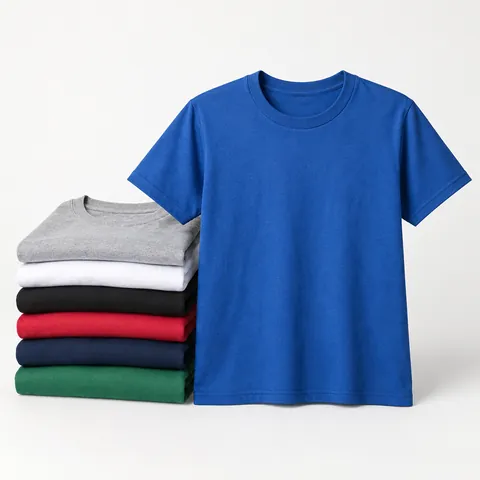 Bulk and screen-printed t-shirts
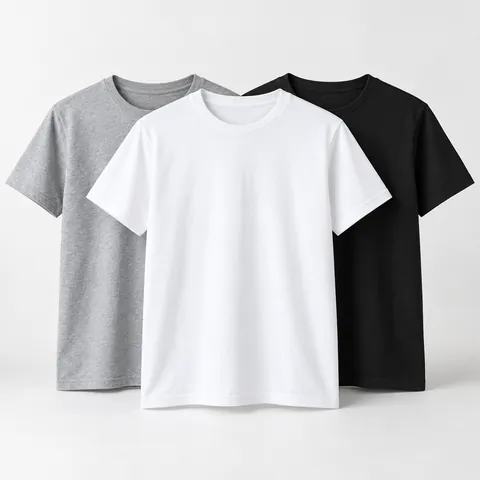 Blank t-shirts for DIY printing
What matters for small orders
| Factor | Look for |
|---|---|
| Minimum order | No minimum, or low minimums for personalised items |
| Print method | DTG or DTF for full colour; vinyl for names and numbers |
| Design tool | Upload, placement preview and size guides |
| Shirt choice | Several brands, weights and fits with size charts |
| Turnaround | Stated production time plus shipping |
| Guarantee | Reprint or refund if printing is faulty |
Compare no-minimum custom t-shirt printing and read how each service handles print defects before ordering.
Check the mock-up carefully
- Spelling, dates and names.
- Print size relative to the shirt size.
- Colour on the actual shirt colour.
- Placement — centred, and the right distance from the collar (often 2–4 inches).
Quality signs when it arrives
The print should be smooth, without blotches or pixelation; edges should be sharp; colours should match the proof reasonably well (screens and fabric never match perfectly). Wash once inside out before judging softness — DTG prints often soften after the first wash.
When to switch to screen printing
Once you need roughly two dozen or more shirts with the same simple design, ask for a screen-printing quote. The setup cost is spread over more shirts and the print is usually more vivid and durable.
How do I prepare artwork for a small custom T-shirt order?
Small orders are less forgiving because you may not have a paid proof or a production sample. Start with the cleanest art file you have, not a screenshot from a phone or social media post. If you are using a logo, ask for the original vector file if one exists. Common vector formats include SVG, AI, EPS and PDF. If you only have a photo or raster image, use the highest-resolution version available.
A design that looks sharp on a screen can look soft on fabric if it is enlarged too much. As a rule of thumb, avoid stretching a small image to fill the whole chest. Text should be large enough to read at arm’s length, with enough contrast against the shirt color. Thin lines, tiny distressed details and low-contrast colors are more likely to disappear after printing or washing.
- Use a transparent background for logos when possible, so you do not get an unwanted white or colored box around the art.
- Check that the file is not blurry before uploading; zoom in to the expected print size, not just the thumbnail.
- Keep important text and faces away from seams, collars and curved areas of the shirt.
- If the design tool offers a print-area boundary, stay inside it rather than placing art at the edge.
- For group shirts, copy names exactly from a written list instead of retyping from memory.
If you are ordering one shirt as a gift, no-minimum custom T-shirt printing is usually the simplest route because you can upload full-color art and order only what you need. If you want to cut costs and are comfortable making the shirt yourself, blank T-shirts for DIY printing may make sense for heat-transfer vinyl, iron-on transfers or other home methods.
What print method is best for one custom shirt?
The best method depends on the design, not just the order size. DTG and DTF are often used for small runs because they can handle full-color artwork without a separate setup for each color. Vinyl is useful for simple lettering, names, numbers and one- or two-color graphics. Embroidery is not the same as T-shirt printing, but it can work for small chest logos on heavier shirts if the design is simple enough.
| Print method | Works best for | Watch-outs |
|---|---|---|
| DTG | Photos, gradients and full-color designs on cotton or cotton-rich shirts | Very bright colors may be harder on dark garments; print feel can vary by shirt |
| DTF | Full-color designs on many fabric blends | The printed area can feel more like a thin transfer layer |
| Vinyl | Names, numbers, block text and simple shapes | Not ideal for tiny details, large photo prints or complex color blends |
| Screen printing | Repeated simple designs when the quantity is higher | Setup makes it less practical for one or two shirts |
- Choose DTG or DTF for artwork with many colors, shading or a photo.
- Choose vinyl for a single name, jersey-style number or short phrase.
- Choose screen printing only when the same design will be repeated enough to justify setup.
- Avoid mixing print methods in the same order unless the seller clearly explains how each item will be produced.
For a single shirt, the key trade-off is flexibility versus feel. Full-color digital printing gives more design freedom. Vinyl and screen printing can look bold, but they are better suited to simpler artwork.
How can I keep a small custom shirt order affordable?
With small orders, the price per shirt is usually higher because there are fewer items to spread out handling, setup and shipping costs. You can still avoid unnecessary add-ons by keeping the design simple and choosing standard shirt options. Before checkout, review the total cost after shipping, rush fees, extra print locations and premium garment upgrades.
A front-only design is usually simpler than printing on the front and back. A small left-chest logo can use less print area than a full-front graphic, though every seller prices differently. If you need names on each shirt, expect personalization to add complexity because each shirt becomes a separate item.
- Use one print location unless a second side is truly needed.
- Pick a standard shirt color that provides strong contrast with the design.
- Avoid rush production if the shirt is not time-sensitive.
- Order all sizes at the same time to avoid paying shipping twice.
- Check whether the seller charges extra for extended sizes, sleeve prints or individual names.
If you are close to needing a few dozen identical shirts, compare a small-order checkout total with a quote for bulk screen-printed T-shirts. The better value depends on the design, shirt style, number of ink colors, deadline and shipping distance. Do not assume bulk is cheaper until the quote includes all setup and delivery charges.
Should I order a sample before a small event or team order?
A sample is useful when the shirts matter for an event, fundraiser, staff uniform or family trip. One sample lets you check size, fabric feel, print placement and color before committing to the full group order. It also helps you see whether your design needs larger text, a different shirt color or a simpler layout.
Build extra time into the schedule if you plan to sample. You need time for production, shipping, review and a corrected reorder if something is off. If the event date is fixed, work backward from the date the shirts must be in hand, not the date you hope they ship.
- Order one shirt in the same color and style you plan to use for the group.
- Wash and dry it the way the wearer is likely to wash it.
- Check whether the print cracks, lifts, fades unevenly or feels uncomfortable.
- Confirm that the shirt still fits after washing.
- Use the final approved file and placement for the rest of the order.
If you cannot order a sample, slow down during proofing. Print the mock-up on paper at roughly the expected size, hold it against a shirt and check readability from several feet away. This simple step can reveal text that is too small or artwork that sits too low.
Frequently asked questions
Can I order just one custom T-shirt?
Yes, many custom T-shirt services accept single-shirt orders, especially when they use DTG, DTF or vinyl. Check the product page for minimum quantity, because some items or print methods may still require a higher count.
Why does my custom shirt look different from the online preview?
Screens are backlit and fabric is not, so colors can look different in person. Shirt texture, fabric color and print method also affect the final result. The preview is best used for layout and placement, not as a perfect color guarantee.
What shirt color is safest for a small custom order?
Choose a shirt color that gives strong contrast with the design. Dark ink on a light shirt or light ink on a dark shirt is easier to read than similar colors placed together. If exact brand colors matter, ask the printer what file type and color information they prefer.
How far ahead should I order custom shirts for a small event?
Order as early as you reasonably can, especially if the shirts are needed for a fixed date. Allow time for production, shipping, possible carrier delays and a correction if the order arrives with a printing defect. Rush options can help, but they may limit your ability to fix mistakes before the event.
Are small custom T-shirt orders returnable?
Personalized shirts usually are not returnable just because you changed your mind or chose the wrong size. Reprints or refunds are more commonly limited to printing errors, defects or mistakes caused by the seller. Read the policy before ordering and save screenshots of the approved design.
Disclosure: As an Amazon Associate I earn from qualifying purchases. This site may earn a commission when you buy through its links, at no extra cost to you. Product details come from public manufacturer information; always check the merchant page for current specifications and prices. We have not hands-on tested the products described here.